



Latest Issue
 
Windtech International January February 2025 issue

Click here for the PDF version


 Follow us at BlueSkyFollow us at BlueSky


follow

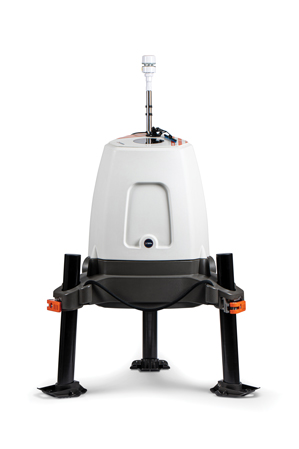
ZX Lidars ZX300e Figure 1ZX 300e Wind Lidar Achieves IEC 21- to 200-Metre Classification

The global wind industry continues its advances towards ever-larger turbines. Whereas hub heights of 80 to 100 metres were once considered tall, today’s turbines are routinely installed at hub heights exceeding 120 to 160 metres, with rotor diameters of 170 to 200 metres. This scale of technology demands a measurement solution that can provide finance-grade wind data across the full rotor swept area. Without such measurement certainty, wind projects risk underperformance, increased cost of capital, and reduced investor confidence.

By Alex Woodward and James G. Downs, ZX Lidars, UK

Meteorological masts once provided the benchmark for wind measurements in the industry, but at heights above 120 metres their deployment becomes increasingly impractical. Masts of 200 metres are rare, often unjustifiably expensive, and sensitive to raw material prices, and in many regions installation and maintenance is logistically challenging. This has accelerated the uptake of remote sensing devices (RSDs), particularly wind lidars. These instruments measure the wind remotely, profiling it vertically from ground level to hub height and beyond, without the structural, logistical, maintenance, health and safety, and planning constraints of a mast.

Login

Use of cookies

Windtech International wants to make your visit to our website as pleasant as possible. That is why we place cookies on your computer that remember your preferences. With anonymous information about your site use you also help us to improve the website. Of course we will ask for your permission first. Click Accept to use all functions of the Windtech International website.