



- Details
- Category: Articles
Supporting Wind Turbines Cost-effectively at Hub Heights of over 80 Metres
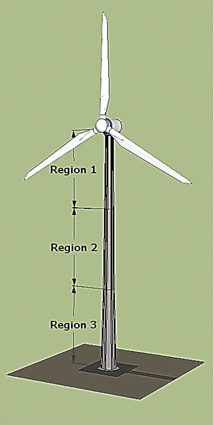 Wind energy production at the utility scale has commonly been limited to an 80-metre tall hub height in the USA and elsewhere. Strangely enough, this limitation comes from transportation constraints and how the 80-metre-tall steel tubular towers are manufactured and transported. If transportation always controlled how tall we build our infrastructures, urban cities around the world would look completely different today. Transportation capabilities by no means should constraint the evolution of structures; otherwise, the kilometre-plus-high Kingdom Tower under construction in Jeddah, Saudi Arabia, could only be a dream. It is no surprise that studies have shown that as wind turbine towers get taller, a concrete solution may become more cost-effective than the steel tubular option. So, why are we not routinely building concrete towers to reach taller hub heights? How do we get there?
By Sri Sritharan, Wilson Engineering Professor, Department of Civil, Construction and Environmental Engineering, Iowa State University, USA
The Hexcrete concept offers a concrete tower solution with an intention of reaching newer hub heights cost-effectively. The concept eliminates transportation challenges and associated costs by using prefabricated columns and panels. Concretes with compressive strengths higher than that of normal concrete combined with prestressing offer competitive dimensions for tapered Hexcrete towers.
- Details
- Category: Articles
Challenges and Solutions for Wind Turbines
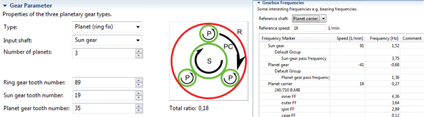 Rotor blades in wind turbines are growing longer – but also slower. Multi-megawatt wind turbines will turn even more slowly, so reproducible low-frequency vibration monitoring will gain in importance not only for the main rotor but also for the slow-operating gearbox components and roller bearings. Reliably measuring low frequencies, however, can be rather tricky. This article discusses some of the issues that pose new challenges to sensor and measurement hardware manufacturers and some possible solutions.
By Dr Edwin Becker, Pruftechnik Condition Monitoring GmbH, Germany
What Are Low-Frequency Vibrations?
According to VDI 3834 and ISO 10816-21, low-frequency vibrations are defined as vibrations between 0.1 and 10Hz. These vibrations are analysed for their velocities and acceleration rates, and the least favourable values count.
- Details
- Category: Articles
How a New Class of Wind Turbine was Developed
 What do you do when you want a wind turbine, but it is not possible because of local planning regulations? Most people would just give up and look elsewhere for their renewable energy, but not Win Keech. Win lives in the North York Moors National Park, a beautiful part of northern England, with extremely rigorous planning requirements, so much so that in the 1,500 km2 park (which is in one of the windiest parts of the UK) there is only one wind turbine installed. To Win, the solution was obvious, he decided to invent his own wind turbine that would be acceptable to the planners.
By Dean Gregory, Co-founder, The Power Collective Ltd, UK
The brief was simple – the turbine had to be as unobtrusive as possible, efficient at all wind speeds, work well in the urban environment, and be silent, vibration free and inexpensive.
- Details
- Category: Articles
A Study of Torsional Reversals Caused Through Wind Events and Operating Conditions
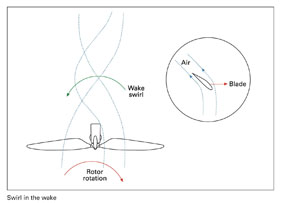 Although wind turbines have been around for decades, recent research has been focused on what occurs with a wind turbine under various wind conditions. It is understood anecdotally that high gusts and turbulent winds can add to the chance of breakdown of wind turbine equipment and lead to an increase in O&M and capital costs. Ridgeline and downwind turbines see higher O&M costs. Most of the earlier focus was on the effects on blades and tower structures. New data shows how the entire drive-train sees an impact from these transient events. Drive-train torque monitoring on various turbine models has shown that an asymmetrical torque control device reduces the damaging loads and helps extend turbine life.
By Doug Herr, General Manager, AeroTorque Corp., USA
Types of Transient Wind Conditions Faced by Wind Turbines
Wind turbines see a broader range of dynamic loads than other rotating equipment. They experience variation from the grid/generator (in the form of curtailments, grid loss, voltage changes etc) and also see very frequent wind changes. Storms, gusting conditions and even a sudden wind loss can cause significant variability in drive-train loads. These common events all contribute to the reduction in the expected life of drive-train components.
- Details
- Category: Articles
Root Cause Hypotheses and How to Prevent Failures
 The failure of bearings due to the development of white-etching cracks (WEC) in the inner ring of the bearing has become a leading cause of wind turbine gearbox unreliability. The failures are not confined to any single gearbox or bearing manufacturer, but are systemic throughout the industry. The root cause of the failures is not known, although many theories have been proposed and are currently under investigation. Even though the cause of failures is not well understood, risk factors that make a bearing more prone to experience WEC failures are known, as are factors that make a bearing less prone to these failures. By following some simple best practice guidelines in the selection of bearings, WEC bearing failures can be minimised or prevented altogether.
By Rob Budny, President, RBB Engineering, USA
Background on WEC Failure Mode
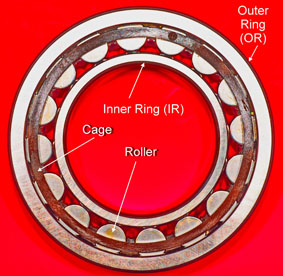
WEC failures are a relatively recent phenomenon, and can occur at stress levels much lower than those required to cause ‘classical’ rolling contact fatigue. WEC failures were first observed in the automotive industry in the 1990s. The failures occurred in alternator bearings, and the failure rates and consequences of failure were both much lower than what is seen in wind turbine gearboxes today. The components of a cylindrical roller bearing are shown and labelled in Figure 1. The WEC failure mode occurs most often in the inner ring of a bearing. The reasons for this are twofold:
- Details
- Category: Articles
The Growing Role of Technical Certification in Distributed Wind
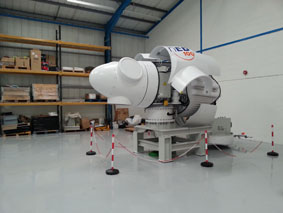 The European distributed wind market, where power is produced using small or medium-scale turbines close to where it is consumed, is still at an early stage of development. While medium-scale manufacturers and developers in the UK and Italy have profited from incentives that have spurred growth, other countries are yet to match this level of activity. And, even in the relatively established markets, uncertainty over tariff levels and variations in the certification requirements for different sizes of turbine have not helped things.
By Miguel Hoyos Irisarri, Technical Director, Norvento, Spain
The UK has a feed-in tariff (FiT) system that auto-regulates itself, lowering payments as more capacity is brought on-line throughout the country. This system was introduced on the premise that initial growth would contribute to a proportional reduction in costs for the supply chain. Since the introduction of FiTs in 2010, the industry has managed to reduce the CAPEX costs of a standard project by approximately 11%. Tariffs, meanwhile, have reduced by 35% on average (based on RenewableUK data for the 15 to 500kW range).
- Details
- Category: Articles
Modern, Wind-specific Technology Provides Optimised Performance, Remote Monitoring and Control
 Rapid developments in electronics and control systems over the last 30 years have provided new opportunities for operation of wind turbines. Retrofitting older turbines with a modern control system provides the turbine owner with significant improvements in relation to remote monitoring, control and root cause analysis. Although retrofitting a control system is a technical challenge, the benefits are clear: improved turbine performance both in terms of availability and power production. This article describes the challenges and results of a customer project undertaken by KK Wind Solutions to develop and install retrofit solutions for a Bonus 1.3MW and a Vestas V47 turbine.
By René Balle, Chief Technology Officer, KK Wind Solutions, Denmark
At the beginning of 2014, KK Wind Solutions started a customer project with the aim of developing retrofit solutions for a Vestas V47 and a Bonus 1.3MW turbine. Eight months later, the two solutions, based on a modern, sixth-generation control system, were installed and commissioned at the site in the USA.