



- Details
- Category: Articles
Addressing Uncertainty Through Techno-Economic Modelling
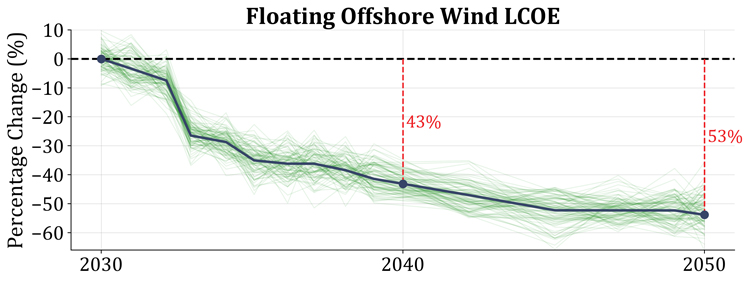
Floating offshore wind must continue to reduce costs while managing significant uncertainties, especially in heavy maintenance. Gaining real-world operational experience is crucial to close knowledge gaps and enhance maintenance strategies. At the same time, techno-economic models provide powerful tools for simulating scenarios and supporting informed decision-making. In this context, this article explores heavy maintenance challenges and presents a practical example demonstrating how these models can effectively address uncertainty in floating offshore wind projects.
By Manu Centeno-Telleria, Researcher and Lecturer, Mondragon University, Spain
- Details
- Category: Articles
Integrating AI and Metocean Data in Offshore Operational Planning
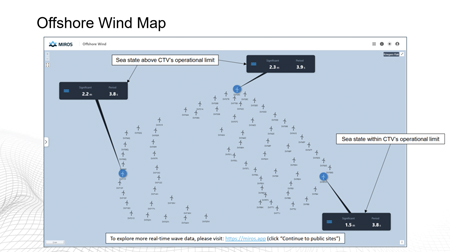 As offshore energy operations expand into deeper, more volatile waters, accurate and timely weather forecasting becomes increasingly vital. Traditional forecasting tools, while useful, often lack the resolution and immediacy required for local, dynamic decision-making. By integrating real-time metocean measurements with artificial-intelligence-powered forecasting systems, operators can gain sharper, site-specific insight to optimise offshore operations. This article explores how these technologies are being deployed, particularly at sites such as the DanTysk wind farm, to improve weather window reliability, increase operational efficiency, and enhance crew safety, offering a glimpse of what future-ready forecasting looks like in the offshore energy industry.
By Richard Chen, Customer Success Manager, Miros, Norway
- Details
- Category: Articles
Preliminary Measurements and Research Agenda
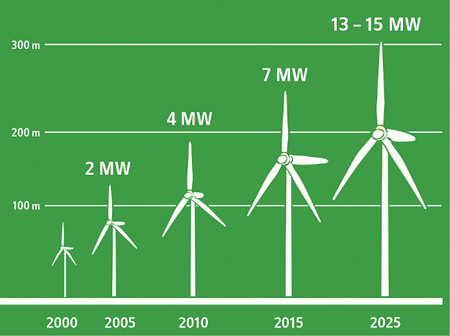 As part of an ongoing research project, we conducted preliminary infrasound measurements at several Swedish wind farms. The objective was to evaluate variations in the infrasound signal between wind turbine operational and shutdown modes and to identify differences between infrasound levels measured near wind farms and at reference locations unaffected by wind turbine emissions. This article summarises early observations, outlines the analytical approach, and presents a research agenda for future work.
By Per Ängskog, Kourosh Tatar and José Chilo, University of Gävle, Sweden
- Details
- Category: Articles
 Enhancing Wind Farm Efficiency
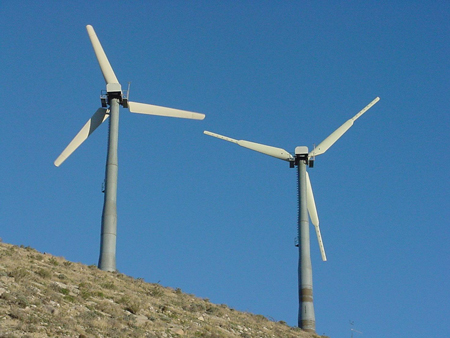
Wind farms aim to maximise energy production while maintaining safety and reliability. However, even identical turbines within the same wind farm often show significant performance gaps because of location-specific wind conditions, such as terrain variations or wake effects. Underperforming turbines, despite high availability, pose a challenge for operators seeking to optimise output. Traditional solutions, such as relocating turbines, over-rating, or adding vortex generators, often prove impractical or yield limited gains. Blade tip extensions offer a compelling alternative, increasing the rotor swept area to capture more wind and boost annual energy production by 5% to 15%. This article explores the technical basis, real-world applications, and economic benefits of blade tip extensions, highlighting their role in enhancing wind farm efficiency. By examining feasibility, challenges and industry trends, we provide practical insights for operators looking to improve underperforming turbines without major overhauls, supporting both economic and environmental goals in wind energy.
By Jack Wallace, Principal / Business Development Manager, Renewable Performance Engineering, USA
- Details
- Category: Articles
 Leveraging Seasonal Predictions to Anticipate Wind Energy Returns
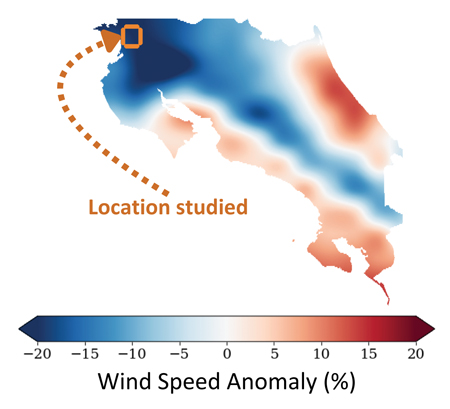
Seasonal production forecasts are emerging as a helpful tool to anticipate wind energy fluctuations and improve planning. Our case study on Costa Rica’s 2024 wind drought illustrates how these forecasts can be turned into actionable insights, anticipating reduced power generation months in advance. Through the use of machine learning for model post-processing and the generation of confidence intervals, the forecast accurately predicted the significant wind production drop in the region six months ahead while providing a reliable measure of uncertainty. Ultimately, these results offer a realistic example of how long-range forecasting might benefit planning and resilience in wind energy operations.
By Yazmina Zurita Martel, R&D Data Scientist, Nebbo Weather, Spain
- Details
- Category: Articles
 Real-Time Insights into the Impact of Turbine Noise and Shadow Flicker
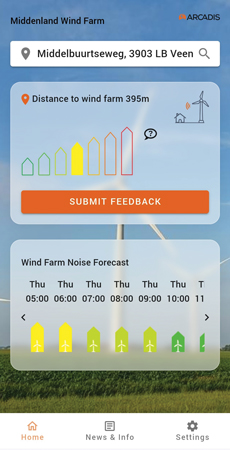
As wind energy continues to expand to meet global sustainability goals, its growth often encounters challenges related to community acceptance. To address these concerns, an interactive tool was developed that combines advanced forecasting and community feedback to enhance communication, transparency and mitigation strategies for socially sustainable wind energy development.
By Erik Koppen, Principal Wind Energy and Noise Consultant, Arcadis, the Netherlands
- Details
- Category: Articles
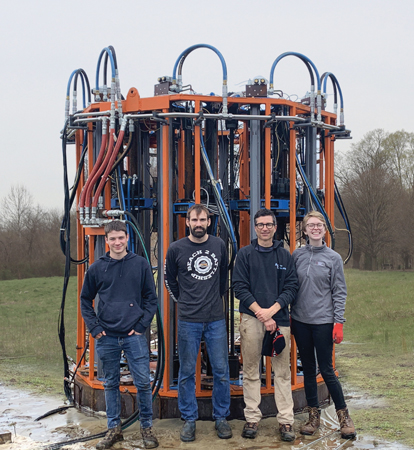 Modular Helical Anchoring Technology
As floating offshore renewable energy technologies, including wind, solar and ocean energy devices, move towards commercial-scale deployment, anchoring and mooring systems are becoming increasingly important. Anchors and moorings represent 10–15% [1] of total capital expenditure in floating wind farms and have a significant influence on foundation design, energy performance, maintenance requirements and decommissioning. Inadequate anchor selection or configuration can lead to increased costs, technical inefficiencies and permitting delays.
By Zachary Miller, Chief Technology Officer and Co-founder, Triton Anchor, USA