



- Details
- Category: Articles
 Timber Hybrid Towers for Wind Turbines
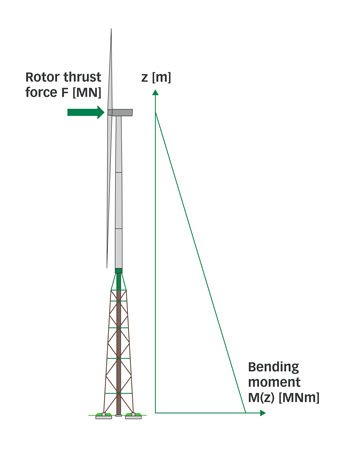
The demand for taller towers for wind turbines has been growing steadily for years. As tower heights increase so do the requirements for structural design and material efficiency. Conventional tower construction methods are increasingly reaching their technical and economic limits. Could timber hybrid towers be a suitable alternative to meet the increasing static requirements while enabling more efficient use of materials?
By Werner Mussnig and Roman Braun, Hasslacher Green Tower, Austria
- Details
- Category: Articles
Moving Beyond Prediction with AI-Based Detection Models
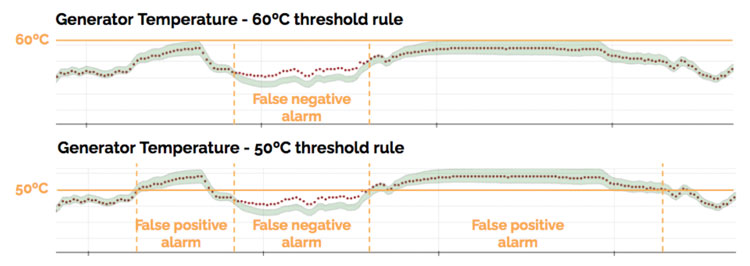
The wind industry faces immense pressure to maximise asset availability and reduce operational expenditure. Traditional maintenance strategies, whether based on fixed schedules or simple alerts, often fall short, leading to costly unplanned downtime, unnecessary component replacements, and missed opportunities for optimisation. The challenge is moving from predictive models, which only forecast a failure, to prescriptive maintenance, which provides specific, actionable recommendations. This article provides a technical explanation of how artificial-intelligence-based detection models bridge this gap, using complex data to diagnose developing faults and prescribe a clear course of action, ultimately improving turbine reliability and reducing O&M costs.
By Silvio Rodrigues, Chief Innovation Officer and Co-founder, Jungle, Portugal
- Details
- Category: Articles
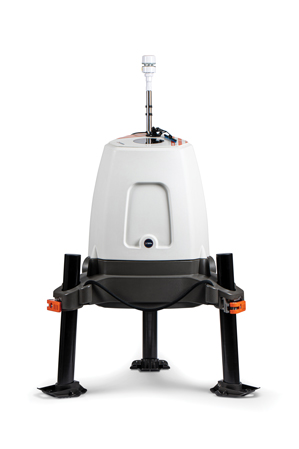 ZX 300e Wind Lidar Achieves IEC 21- to 200-Metre Classification
The global wind industry continues its advances towards ever-larger turbines. Whereas hub heights of 80 to 100 metres were once considered tall, today’s turbines are routinely installed at hub heights exceeding 120 to 160 metres, with rotor diameters of 170 to 200 metres. This scale of technology demands a measurement solution that can provide finance-grade wind data across the full rotor swept area. Without such measurement certainty, wind projects risk underperformance, increased cost of capital, and reduced investor confidence.
By Alex Woodward and James G. Downs, ZX Lidars, UK
- Details
- Category: Articles
Production-Conditioned Algorithms Reduce Energy Losses
Noise curtailment of wind turbines is a common way to solve the problem of excess noise near wind farms. Reducing the received sound to comply with noise restrictions may sound simple, but if the goal is to minimise production loss, the problem can become rather complex. In this article, we demonstrate how a well-composed strategy using a production-conditioned optimisation algorithm can drastically minimise the potential production loss.
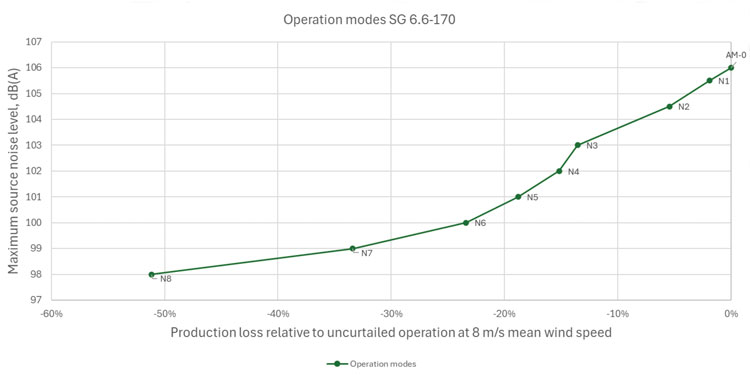
By Thomas Sørensen and Moritz Hildemann, EMD International, Denmark
- Details
- Category: Articles
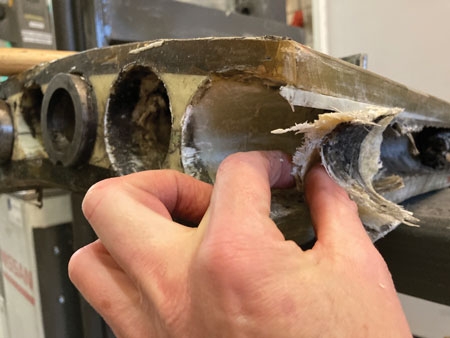 How Engineers Brought Factory-Grade Repairs to the Field
Remanufacturing, the engineering process of restoring worn components to their original specification, has strong potential in wind energy O&M. Blade root inserts are critical load-transfer bushings that have become frequent failure points, presenting as loose bushings, caused by cyclic loading and resin matrix fatigue. Traditionally, on-site repair was impractical, forcing costly transport to OEMs or even blade scrapping. A 2025 case study demonstrated a viable alternative – Dutch We4Ce and Danish CNC Onsite developed a patented remanufacturing method enabling wind park operators to restore inserts on-site. In Europe, technicians were trained in precision drilling, resin infusion bonding, and bushing installation before a dedicated workshop was set up at a 50MW wind park in South Asia. Within weeks, the wind park was carrying out repairs independently. The method delivers up to 60% cost savings, reduces downtime, and eliminates heavy haul logistics. The transferability highlights remanufacturing’s potential as a mainstream O&M strategy, extending rotor blade life while advancing reliability and sustainability goals.
By Søren Kellenberger, CNC Onsite, Denmark and Edo Kuipers, We4Ce, the Netherlands
- Details
- Category: Articles
New Approaches Enhance Gearbox Durability and Operational Efficiency
Like any modern industrial sector, the success of the wind energy industry depends on continuous innovation across its component suppliers. As turbines grow larger and more powerful, rapid technological advancement throughout the supply chain is essential to balance efficiency, reliability and cost-effectiveness. A critical, but often overlooked, area of innovation lies in lubrication, which is key to reducing friction, protecting components, and lowering maintenance costs and downtime.
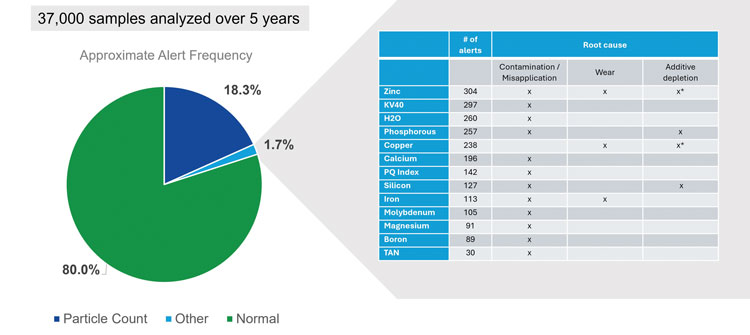
By Michael L. Blumenfeld, ExxonMobil Technology and Engineering Company, USA
- Details
- Category: Articles
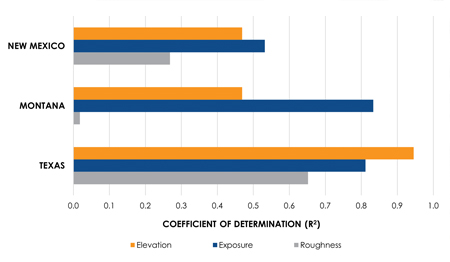 Incorporating Exposure, Surface Roughness, and Elevation
In wind resource assessment, the conventional approach to meteorological (met) mast siting has emphasised distance, recommending maintaining a maximum separation distance between each met site and the proposed wind turbine locations. This industry-accepted method assumes that shorter distances translate to better representativeness. But is distance truly the metric that matters most?
By Liz Walls and Erin Roekle, One Power Company, USA