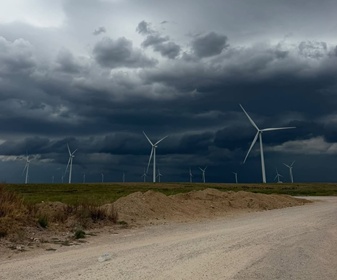





A review by the Sun Day Campaign of new data from the U.S. Energy Information Administration shows that wind energy, alongside solar and battery storage, continues to lead growth in the USA power sector. In January 2026, electricity generation from wind increased by 1.9% compared with the same month a year earlier, contributing to a wider expansion of renewable energy output. Combined renewable generation, including wind, solar, hydropower and biomass, rose by 11.5% year-on-year and accounted for 25.1% of total USA electricity supply.
Over the 12-month period from February 2025 to January 2026, wind capacity expanded by 6,016.3 MW. Together with solar, wind capacity now represents 29.24% of total installed generating capacity in the USA. Combined additions from wind, solar and battery storage reached 55,221.6 MW during the period, while net capacity growth from fossil fuels and nuclear remained below 1 GW.
Solar recorded the largest increase, with more than 33,400 MW of new utility-scale and small-scale capacity added, while battery storage contributed a further 15,788.8 MW. By the end of January 2026, renewable energy sources accounted for 33.5% of utility-scale capacity, rising to 36.6% when small-scale solar is included.
Looking ahead, the U.S. Energy Information Administration projects continued expansion in wind capacity, with 9,840.7 MW of onshore wind and 4,155.0 MW of offshore wind expected to be added over the next 12 months. Combined with further growth in solar and battery storage, total new capacity additions from these technologies could be around 60% higher than in the previous year.
At the same time, fossil fuel and nuclear capacity are expected to stagnate or decline, with no growth forecast for nuclear and a net reduction in fossil fuel capacity. As a result, renewable energy and battery storage are projected to account for all net new utility-scale capacity additions in the coming year.