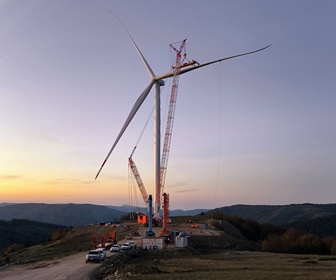





Solar and wind accounted for 95% of new US electricity generating capacity added during the first quarter of 2026, according to an analysis by the Sun Day Campaign of data released by the Federal Energy Regulatory Commission (FERC). Solar represented 78% of additions, while wind accounted for 17%.
According to FERC's Energy Infrastructure Update, published on 29 October 2026 with data through 31 March 2026, 6,034.4 MW of utility-scale solar capacity and 1,316.1 MW of wind capacity entered service during the first quarter. Biomass added a further 4.8 MW, while natural gas accounted for less than 5% of new capacity. No additions were reported for other energy sources.
Solar has been the largest source of new monthly generating capacity for more than two and a half years. Its installed utility-scale capacity in the US now exceeds that of nuclear, wind, hydropower, biomass, geothermal and oil individually. Combined, wind and solar account for 24.8% of the country's total installed utility-scale generating capacity.
Three-year capacity outlook
FERC forecasts that solar will add a net 106,520 MW between April 2026 and March 2029. Wind is expected to add a further 26,699 MW, making it the second-largest source of projected capacity growth.
The forecast also includes net additions of 1,350 MW of hydropower and 482 MW of geothermal capacity, while biomass capacity is expected to decline by 185 MW.
Natural gas capacity is projected to increase by 47,449 MW, while nuclear power is forecast to add 385 MW. Coal capacity is expected to decrease by 31,371 MW and oil by 1,013 MW.
Overall, FERC's forecast indicates net additions of 134,866 MW from renewable energy sources over the three-year period, compared with net growth of 15,450 MW for fossil fuels and nuclear power combined.