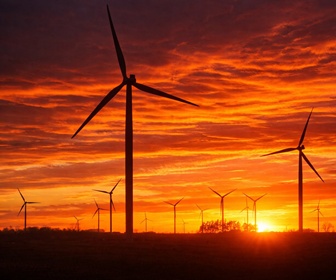





A year-long pilot at an offshore wind turbine has shown that thermal cameras combined with artificial intelligence can be used to observe potential bird collisions offshore. Initiated by Vattenfall, the pilot was carried out at the Hollandse Kust Zuid offshore wind farm in collaboration with Wildlife Imaging Systems (WIS) and Wageningen University & Research (WUR).
WIS developed a system using 16 thermal cameras installed on an offshore wind turbine, providing full coverage and operating 24 hours a day. Combined with artificial intelligence, the system detected and analysed bird movements during day and night, including in poor visibility such as fog and rain. Researchers from WUR analysed the data to assess the system’s performance and identify areas for improvement.
Millions of songbirds cross the North Sea during spring and autumn migration, mostly at night. The system can detect these small birds and bats in darkness, as well as larger birds during daylight. Its ability to detect and analyse bird movements offshore also made it possible to begin quantifying collision risk.
Over almost a year of monitoring, covering both spring and autumn migration, 22 possible bird collisions were identified. Two were confirmed and one was considered highly probable.
The study does not indicate that bird collisions are rare, nor that the results from one turbine can be applied directly to other locations. The primary aim was to assess the technology under real offshore conditions. The ability to generate initial observational data on collisions was an additional outcome.
The researchers are now using the findings and experience from the pilot in further research. This work will focus on collecting collision data under different conditions and at different locations, further improving the monitoring technology, and increasing understanding of when and under what circumstances bird collisions occur. The findings could support the development of more effective mitigation measures for offshore wind farms.